[I started writing this post about 8 weeks ago shortly after baby A was born. I keep adding to it instead of publishing it! I have a bunch more books that I am in the middle of now, but I will save those for another post].
I have been keeping busy with reading and knitting while I rest and recover. I finished a bunch of books that I think are worth sharing.
Family Friendly Farming by Joel Salatin is like a treatise on why we farm and homeschool. A lot of it just had me nodding and smiling. Our farm is not nearly at his scale, but a couple of things he suggested that I want to implement better are to help the kids "own" their farm enterprises. Brother M and I have been talking about him raising and selling pullets on his own in a year or two. I am still thinking about what the author said about farm chore risks - learning to use tools and such on the farm involves a certain amount of risk, but that helps kids in the long run learn to gauge risks. It is hard for me to let them do things that are "dangerous".
Carving Out a Living on the Land This is one of the best books I have ever read about how to organize a successful small scale farm business. He uses his experiences to illustrate his points and makes suggestions for how they could apply to other small farm scenarios. He is a gifted writer and it was a pleasure to read.
The Foxfire Books These books are famous with good reason. I loved reading these first hand accounts of how people live off the land (Appalachia). This is REAL country living, including the poverty, not just a fancy money making blogger's version of things. These are the stories of old grannies who learned to cook possums and messes of poke. And grandpappies who made money trapping and tanning animal skins and selling moonshine. However fun these are to read, there are two drawbacks -- the articles include a lot of local vernacular that is hard to follow and they are usually not complete enough to be used as a "how to" guide. They give me ideas and a wildly real perspective on what country living was like.
Farming the Woods I liked this book before I even started reading it. It was written by a couple of guys who teach at Cornell and farm around Ithaca, New York. It includes a lot of technical research. I was mostly looking for ideas of how to best farm the woods on our property efficiently. I confirmed to myself that I am not prepared to start growing and selling ginseng. I am interested in growing woodland herbs for our family and selling them as plant starts. The book helped ease some of my concerns about mushroom growing as well. Though I still hesitate to grow them since I am the only one in my family who enjoys eating them.
I completed
Penn State's Online Course: Bee Keeping 101. I loved this course and took copious notes so that I can go back to them. I don't know when I will feel on top of things enough to start keeping bees myself. I love the idea of it, but it is hard work to keep bees healthy and happy. We have plenty of pollinators so far, so there is no urgency to do it at this time.
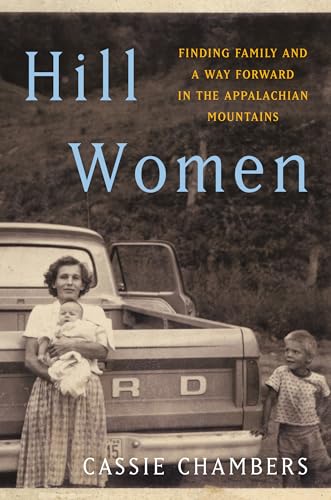
Hill Women is an adult non-fiction book about life in Appalachia told through the lens of Cassie Chambers (the author's) own life and family experiences. I loved it and at the same time was frustrated by all the issues left unresolved at its conclusion. I guess that is the point though.
Rebecca Caudill books: We have read a bunch of Rebecca Caudill's books over the years. I only recently learned that she grew up in Appalachia. Her memoir is called
My Appalachia. Her stories are quaint country tales, simple, excellent quality literature for children. In her memoir she gives a beautiful description of the Appalachia of her childhood:
"Doors in the houses of my Appalachia were never locked against friend or stranger. The people found their pleasures in the simple things of life. They possessed a kind of profound wisdom, characteristic of those who live close to Nature, who walk in step with Nature's rhythm, and who depend on Nature for life itself."
Jesse Stuart books: More Appalachian stories! He was a teacher and school administrator for many years and has a lot of little stories with a moral. They are short and easy for kids to read. Taps is supposed to be his most famous book. It was written in vernacular and a little difficult for me to get through. At the end of the story I realised that it is largely autobiographical. Then I was awed that he lived through such a wild childhood. I don't think it is appropriate for children under 12. His moral stories are great for all ages.
Lois Lenski books: I love historical fiction (obviously). It is hard to find books that are balanced in terms of both exhaustive historical details and interesting plots. Lois Lenski does a stellar job of achieving this balance. Her books are wonderfully well researched. A great way for children to learn history through stories.
War Books
Children of the Promise - is a historical fiction series about and LDS family living in SLC before, during, and after WWII. I started reading them based on the recommendation of others and kind of slogged through the first two books. Adding the LDS/Salt Lake Valley culture to the mix of WWII history made it hard for me to see past all the stereo-types at first. Book 4 was my favorite. At the end of each book Dean Hughes provides a nice summary of books he used for his research. I enjoyed reading several of those books.
Wings of Faith - was one of the books that Dean Hughes used as source material. It is a wonderful account of the experiences of Ezra T. Benson and Elder Babbel himself trying to provide relief to the saints in Europe in the immediate aftermath of WWII.
Helmets and Lipstick and Love and War were two additional source books about WWII cited in the Children of the Promise series. I imagine that if I had been young and unmarried at that time I would have wanted to be a Red Cross nurse or something similar.
With the Armies of the Tsar is actually about WWI. It is a true story told in the first person (love that!) from the perspective of a British governess who joins the Red Cross in Russia when the war breaks out. She is upper class obviously and some of her opinions are very snobby, but it is still interesting to hear a real person's experience. (Helmets and Lipstick is also a real first hand account of the author's own experiences as a nurse).
The Flight Girls - is similar to several other historical fiction books published in the last 5-10 years about the WASPs. The files on their stories were not publicly available until the 1980s and so most people had no idea of the sacrifices and contributions of female pilots to WWII until long after the fact. A generally good book.